
Requisitos de visado para Italia
Quién puede entrar en Italia, por nacionalidad. Turismo. Datos al 26 de septiembre de 2026.
Los titulares de pasaporte de 138 países pueden entrar en Italia sin visado previo. Los 138 entran sin visado con un pasaporte válido. Todos los demás necesitan un visado, o un e-visado si está disponible, antes de viajar.
- 138 sin visado
- 0 a la llegada
- 0 ETA
- 0 e-visa
- 104 visado requerido
Entrada sin visado
138 nacionalidades Åland
Åland Albania3 meses
 Samoa Americana3 meses
 Andorra3 meses
 Anguilla3 meses
 Antigua y Barbuda3 meses
 Argentina3 meses
 Aruba
Aruba Australia3 meses
 Austria
 Bahamas3 meses
 Barbados3 meses
 Bélgica
 Bermudas3 meses
 Bosnia y Herzegovina3 meses
 Brasil3 meses
 Territorio Británico del Océano Índico3 meses
 Islas Vírgenes del Reino Unido3 meses
 Brunei3 meses
 Bulgaria
 Canadá3 meses
 Caribe Neerlandés
 Islas Caimán3 meses
 Chile3 meses
 Isla de Navidad3 meses
 Islas Cocos o Islas Keeling3 meses
 Colombia3 meses
 Islas Cook3 meses
 Costa Rica3 meses
 Croacia
 Curazao
 Chipre
 Chequia
 Dinamarca
 Dominica3 meses
 El Salvador3 meses
 Estonia
 Islas Malvinas3 meses
 Islas Faroe
 Finlandia
 Francia
 Guayana Francesa
 Polinesia Francesa
 Tierras Australes y Antárticas Francesas
 Georgia3 meses
 Alemania
 Gibraltar3 meses
 Grecia
 Groenlandia
 Granada3 meses
 Guadalupe
 Guam3 meses
 Guatemala3 meses
 Guernsey3 meses
 Honduras3 meses
 Hong Kong3 meses
 Hungría
 Islandia
 Irlanda
 Isla de Man3 meses
 Israel3 meses
 Japón3 meses
 Jersey3 meses
 Kiribati3 meses
 Kosovo3 meses
 Letonia
 Liechtenstein
 Lituania
 Luxemburgo
 Macao3 meses
 Malasia3 meses
 Malta
Malta Islas Marshall3 meses
 Martinica
 Mauricio3 meses
 Mayotte
 México3 meses
 Micronesia3 meses
 Moldavia3 meses
 Mónaco3 meses
 Montenegro3 meses
 Montserrat3 meses
 Nauru3 meses
 Países Bajos
 Nueva Caledonia
 Nueva Zelanda3 meses
 Nicaragua3 meses
 Niue3 meses
 Isla de Norfolk3 meses
 Macedonia del Norte3 meses
 Islas Marianas del Norte3 meses
 Noruega
 Palau3 meses
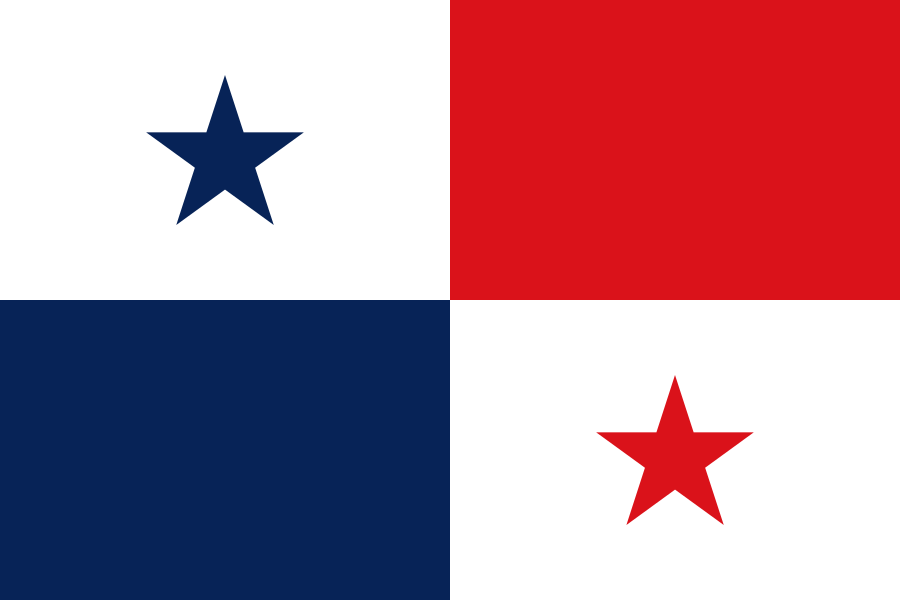 Panamá3 meses
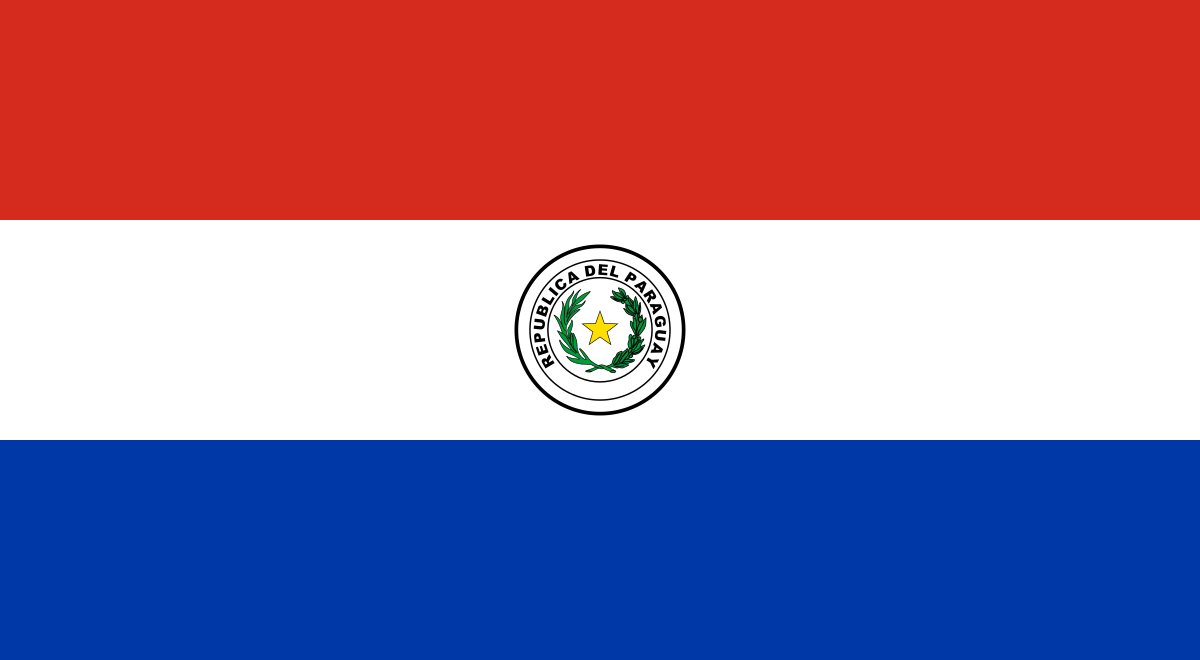 Paraguay3 meses
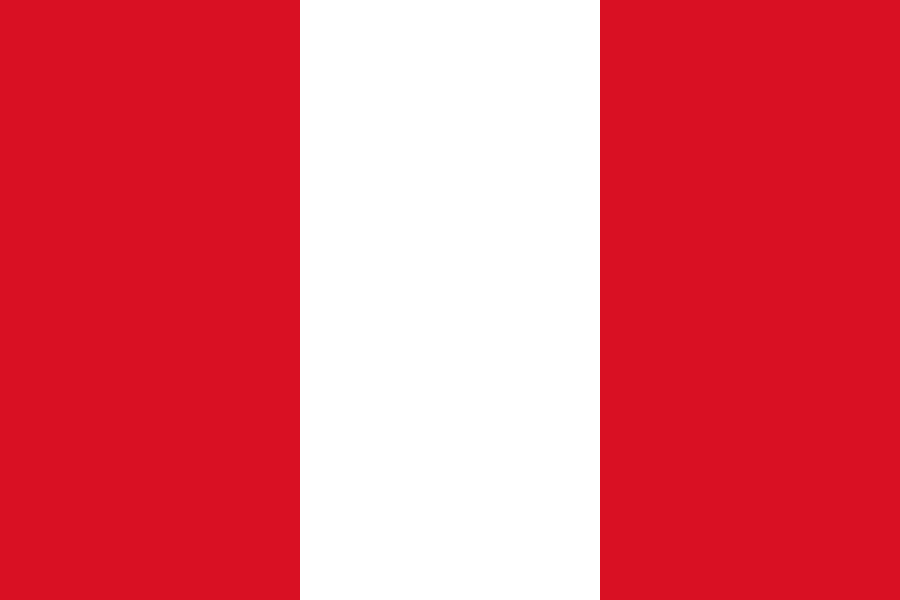 Perú3 meses
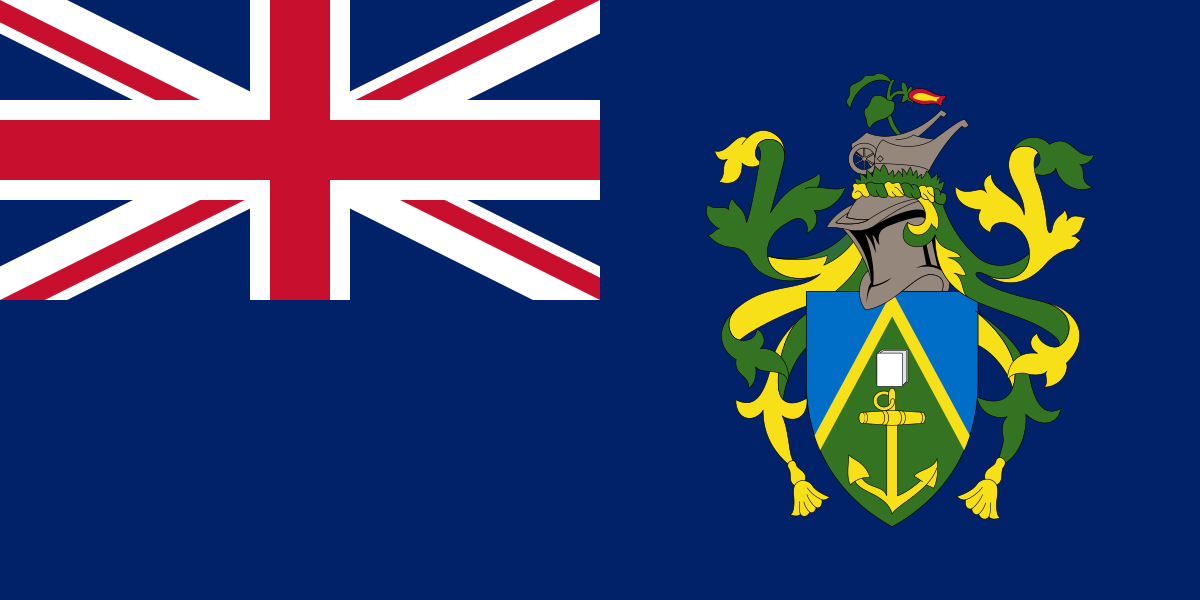 Islas Pitcairn3 meses
 Polonia
 Portugal
 Puerto Rico3 meses
 Reunión
 Rumania
 San Bartolomé
 Santa Elena, Ascensión y Tristán de Acuña3 meses
 San Cristóbal y Nieves3 meses
 Santa Lucía3 meses
 Saint Martin
 San Pedro y Miquelón
 San Vicente y Granadinas3 meses
 Samoa3 meses
 San Marino3 meses
 Serbia3 meses
 Seychelles3 meses
 Singapur3 meses
 Sint Maarten
 Eslovaquia
 Eslovenia
 Islas Salomón3 meses
 Corea del Sur3 meses
 España
 Suecia
 Suiza
Suiza Taiwán3 meses
 Timor Oriental3 meses
 Islas Tokelau3 meses
 Tonga3 meses
 Trinidad y Tobago3 meses
 Islas Turks y Caicos3 meses
 Tuvalu3 meses
 Islas Vírgenes de los Estados Unidos3 meses
 Ucrania3 meses
 Emiratos Árabes Unidos3 meses
 Reino Unido3 meses
 Estados Unidos3 meses
 Uruguay3 meses
 Ciudad del Vaticano3 meses
 Venezuela3 meses
 Wallis y Futuna
Visado requerido con antelación
104 nacionalidades Afganistán
 Argelia
 Angola
 Armenia
 Azerbaiyán
 Bahrein
 Bangladesh
 Bielorrusia
 Belice
 Benín
Benín Bután
Bután Bolivia
 Botswana
 Burkina Faso
 Burundi
 Camboya
 Camerún
 Cabo Verde
 República Centroafricana
 Chad
Chad China
China Comoras
 Costa de Marfil
 Cuba
Cuba Djibouti
 República Dominicana
 RD Congo
 Ecuador
 Egipto
 Guinea Ecuatorial
 Eritrea
 Esuatini
 Etiopía
 Fiyi
Fiyi Gabón
Gabón Gambia
 Ghana
Ghana Guinea
 Guinea-Bisáu
 Guyana
 Haití
Haití India
India Indonesia
 Irán
Irán Irak
Irak Jamaica
 Jordania
 Kazajistán
 Kenia
Kenia Kuwait
 Kirguizistán
 Laos
Laos Líbano
 Lesotho
 Liberia
 Libia
Libia Madagascar
 Malawi
 Maldivas
 Mali
Mali Mauritania
 Mongolia
 Marruecos
 Mozambique
 Myanmar
 Namibia
 Nepal
Nepal Níger
Níger Nigeria
 Corea del Norte
 Omán
Omán Pakistán
 Palestina
 Papúa Nueva Guinea
 Filipinas
 Catar
Catar Congo
Congo Rusia
Rusia Ruanda
 Santo Tomé y Príncipe
 Arabia Saudí
 Senegal
 Sierra Leona
 Somalia
 Sudáfrica
 Sudán del Sur
 Sri Lanka
 Sudán
Sudán Surinam
 Siria
Siria Tayikistán
 Tanzania
 Tailandia
 Togo
Togo Túnez
Túnez Turquía
 Turkmenistán
 Uganda
 Uzbekistán
 Vanuatu
 Vietnam
 Yemen
Yemen Zambia
 Zimbabue
Sitios del Patrimonio Mundial de la UNESCO en Italia
Italia tiene 73 sitios en la Lista del Patrimonio Mundial de la UNESCO.
- 18th-Century Royal Palace at Caserta with the Park, the Aqueduct of Vanvitelli, and the San Leucio Complex
- Aeolian Islands
- Amalfi Coast
- Ancient and Primeval Beech Forests of the Carpathians and Other Regions of Europe
- Arab-Norman Palermo and the Cathedral Churches of Cefalú and Monreale
- Archaeological Area and the Patriarchal Basilica of Aquileia
- Archaeological Areas of Pompei, Herculaneum and Torre Annunziata
- Assisi, the Basilica of San Francesco and Other Franciscan Sites
- Castel del Monte
- Cathedral, Torre Civica and Piazza Grande, Modena
- Cilento and Vallo di Diano National Park with the Archeological Sites of Paestum and Velia, and the Certosa di Padula
- City of Vicenza and the Palladian Villas of the Veneto
- Crespi d'Adda
- Early Christian Monuments of Ravenna
- Etna Park
- Etruscan Necropolises of Cerveteri and Tarquinia
- Evaporitic Karst and Caves of Northern Apennines
- Ferrara, City of the Renaissance, and its Po Delta
- Genoa: Le Strade Nuove and the system of the Palazzi dei Rolli
- Hadrian's Villa
- Historic Centre of Florence
- Historic Centre of Naples
- Historic Centre of Rome, the Properties of the Holy See in that City Enjoying Extraterritorial Rights and San Paolo Fuori le Mura
- Historic Centre of San Gimignano
- Historic Centre of Siena
- Historic Centre of Urbino
- Historic Centre of the City of Pienza
- Ivrea, industrial city of the 20th century
- Late Baroque Towns of the Val di Noto
- Le Colline del Prosecco di Conegliano e Valdobbiadene
- Longobards in Italy, Places of Power
- Mantua and Sabbioneta
- Medici Villas and Gardens in Tuscany
- Monte San Giorgio site fossils
- National Archaeological Museum of Paestum
- Padova botanical garden
- Padua's fourteenth-century fresco cycles
- Palazzo Bianco
- Palazzo Rosso
- Piazza del Duomo, Pisa
- Ponte Vecchio
- Porta Urbica
- Porto Venere
- Portovenere, Cinque Terre, and the Islands (Palmaria, Tino and Tinetto)
- Residences of the Royal House of Savoy
- Rhaetian Railway in the Albula / Bernina Landscapes
- Royal Armoury of Turin
- Sacri Monti of Piedmont and Lombardy
- Sanctuary of the Madonna di San Luca
- Santa Maria delle Grazie
- Su Nuraxi di Barumini
- Syracuse and the Rocky Necropolis of Pantalica
- The Dolomites
- The Great Spa Towns of Europe
- The Sassi and the Park of the Rupestrian Churches of Matera
- The Trulli of Alberobello
- The Venetian Works of defence between 15th and 17th centuries
- The Vineyard Landscape of Piedmont: Langhe-Roero and Monferrato
- The system of Italian-style condominio theatres of the 18th and 19th centuries in Central Italy
- Val d'Orcia
- Valle dei Templi
- Venice and its Lagoon
- Verona
- Verona historic center
- Via Appia. Regina Viarum
- Via Cairoli
- Villa Romana del Casale
- Villa d'Este
- World Heritage Dolomites
- domus de janas
- porticoes of Bologna
- prehistoric pile dwellings around the Alps
- rock drawings in Valcamonica
Fuente: Wikidata, mantenido por la comunidad y no es el recuento oficial de la UNESCO.
Destinos cercanos
Preguntas frecuentes
¿Necesito visado para visitar Italia?
Depende de tu pasaporte. 138 nacionalidades pueden entrar en Italia sin gestionar un visado con antelación (sin visado, a la llegada, o ETA); todas las demás necesitan un visado o e-visado. Usa las tablas siguientes para comprobar un pasaporte concreto.
¿Cuál es la mejor época para visitar Italia?
mayo, julio, agosto, según las normales climáticas de Rome: temperaturas suaves y lluvias por debajo de la media anual.
¿Qué moneda se usa en Italia?
Euro (EUR). 1 USD equivale a aproximadamente 0.88 EUR.
¿Por qué lado de la carretera se conduce en Italia?
Se conduce por la derecha en Italia.
¿Cuántos sitios del Patrimonio Mundial de la UNESCO tiene Italia?
73: 18th-Century Royal Palace at Caserta with the Park, the Aqueduct of Vanvitelli, and the San Leucio Complex, Aeolian Islands, Amalfi Coast, Ancient and Primeval Beech Forests of the Carpathians and Other Regions of Europe, Arab-Norman Palermo and the Cathedral Churches of Cefalú and Monreale, Archaeological Area and the Patriarchal Basilica of Aquileia, Archaeological Areas of Pompei, Herculaneum and Torre Annunziata, Assisi, the Basilica of San Francesco and Other Franciscan Sites, y más.
¿Cuál es el número de emergencia en Italia?
112 / 113 / 115 / 118.
¿En qué zona horaria está Italia?
Rome (UTC+2).
¿Cuál es el aeropuerto más cercano a Rome?
Ciampino–G. B. Pastine International Airport (CIA), a unos 14 km.
Las normas de visado cambian con frecuencia y pueden depender de tu situación particular. Este sitio se compila a partir de fuentes gubernamentales públicas y se ofrece solo con fines informativos generales. Confirma siempre los requisitos con la autoridad de inmigración oficial o un consulado de tu destino antes de viajar.